DON GACONNET
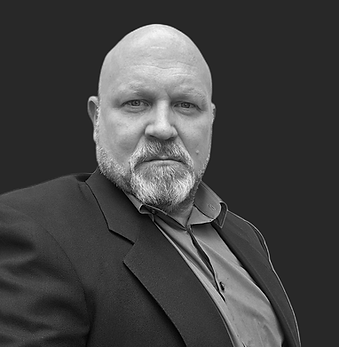
DON L. GACONNET
Cognitive Systems Engineer III
Founder & Principal Investigator, LifePillar Institute for Structural Identity Sciences
Active T3/Secret Federal Security Clearance
Twenty-seven years of identifying what is about to break before anyone in the room can see it — including the person breaking.
The discipline was not learned in a classroom. It was learned across U.S. federal government agencies, every branch of the U.S. military, U.S. Senate offices, law enforcement, homeland security programs, and Fortune 500 critical infrastructure — Walgreens, Stryker Medical, Walmart, Rivian, New Era, Axon Public Safety. Active federal clearance, verifiable through contracting authorities of record.
That is where the methodology for reading what a person cannot accurately report about themselves was developed. Not as theory. As field engineering — systems failing and people failing simultaneously, under load, when both were telling a different story than what the data confirmed.
The instrument that produced the read you experienced was built across this career.
THE ENGINEERING DISCIPLINE
Field Engineering
Where the methodology was built
The work: high-load critical infrastructure under operational conditions. Security systems, network architecture, communications infrastructure, access control — in mission-critical environments where failure produced immediate, measurable consequence. Read the system under load. Find the structural fault before it surfaces. Document what was found.
Every engagement followed the same architecture that operates today: assessment conducted on-site, findings documented in a written report, delivered under professional engagement. That professional services tradition — engagement letter, documented methodology, professional liability — was not adopted from another field. It was the field.
The capacity to read a failing system while simultaneously reading the people operating it was not a secondary skill. It was the primary requirement. A system under load produces data. The people responsible for that system under load produce a different data set — one that frequently contradicts what they report about their own state. Learning to read both in real time, under pressure, with consequences for misreading either — that is what twenty-seven years of field deployment produces.
That discipline is what the Structural Identity Profiler now delivers — applied to the person your exposure depends on, instead of the infrastructure your operations depend on. The engineering is the same. The substrate is different.
THE SCIENTIFIC FOUNDATION
Independent Research
Thirty-nine years. One structural question.
The research began in 1996 with a single observation: when a person falls apart under load, the failure is not psychological. It is structural. The system does not break because of how the person feels about the load. It breaks because the architecture cannot sustain what is being asked of it.
That observation — pursued independently for thirty-nine years — produced the scientific framework underwriting the instrument. Nine laws, individually DOI-registered. Published and deposited at SSRN, OSF, and Zenodo. SSRN Top 3% globally — ranked 80,116 of 2,717,816 authors worldwide. Seven major predictions evaluated against independent peer-reviewed data the framework did not see during development. Zero contradicted.
The assessment engine built on this framework has been validated across 35,000 Monte Carlo simulations — the same statistical methodology applied in aerospace structural engineering, pharmaceutical modeling, and financial risk assessment.
The framework's predictions have been confirmed against independent data in nuclear physics and cosmological observation. The verification is public and linked below.
For the mathematical foundation, prediction confirmations, and full publication record: LifePillar Institute for Recursive Sciences →
THE SOMATIC DISCIPLINE
Reading the Body Under Load
Twenty-seven years of physiological observation
The capacity to read a person's state in real time during a live assessment session was not developed through academic study. It was developed across twenty-seven years of martial arts mastery — 4th Dan Black Belt, Kukkiwon certified. The Kukkiwon is the Korean government's official international taekwondo certification authority. The credential is externally issued, government-backed, and verifiable.
The mastership spans Song Moo Kwan, Moo Duk Kwan, Hapkido, Boxing, and Kickboxing. The student base included law enforcement professionals and competitive martial artists. The instruction environment was structured, technically precise, and performance-verified.
What twenty-seven years of reading bodies under load produces is not a technique. It is a perceptual discipline — the ability to observe physiological state, muscular tension patterns, and autonomic response in real time without instrumentation. When that discipline operates alongside the assessment instrument, the practitioner is reading two channels simultaneously: what the data confirms and what the body displays.
That is why the instrument alone is not the full assessment. The Structural Identity Profiler extends the practitioner's reach. The practitioner reads what the instrument cannot read. Together they produce a structural picture that neither can produce alone. The referral partner who has both has something no competing firm can replicate.
THE CONVERGENCE
Three Disciplines. One Practitioner.
Why this work cannot be replicated
No other practitioner delivers independent structural measurement of the person your exposure depends on. Not because the concept is protected. Because it requires three disciplines converging in a single career:
First — mastery-tier field engineering. Twenty-seven years of reading failing systems in environments where misreading produced immediate, measurable consequence. The assessment methodology, the report architecture, the professional services tradition — all built in the field.
Second — an independently published scientific framework. Thirty-nine years of research producing nine laws validated against independent data. The foundation underwriting the instrument — not borrowed from another discipline, not adapted from clinical psychology, not assembled from existing tools. Built from first principles and verified against data the framework did not see during development.
Third — twenty-seven years of somatic mastery. The perceptual discipline required to read physiological state in real time during a live assessment. This capacity does not exist in clinical training programs, coaching certifications, or counseling curricula. It exists in the martial arts tradition and it was built there across decades.
These three disciplines do not converge by design. They converged across a single career. The Structural Identity Profiler operates at the intersection of all three — and cannot operate without any one of them. That is what the instrument you experienced is built on. That is what no other practice can replicate.
ADDITIONAL TRAINING
Supplementary Credentials
Pattern recognition, cognitive modeling, behavioral assessment
Advanced Trainer certification in Neuro-Linguistic Programming under Dr. Tad James — specializing in language-based pattern recognition, decision-mapping, and communication architecture. Master Practitioner certification in timeline-based resolution methods. Certified Master Hypnotherapist Trainer through the American Board of Hypnotherapy — with emphasis on pattern recognition, clarity under pressure, and structured assessment methodology.
These credentials contributed observational depth to the assessment methodology — specifically the capacity to identify patterns, decision-mapping distortions, and behavioral markers that diverge from the person's self-report. They are supplementary to the three primary disciplines. They are not the foundation. They are the refinement.
FOUNDING PERIOD
The Founding Period
Access before precedent
The practice is in its founding period. The engagement base is in early accumulation. This is stated directly because the sophisticated professional evaluating this work will find it if it is not surfaced — and surfacing it honestly signals the same discipline the work itself requires.
The same evaluation pathway forensic accounting offered the legal profession in the early 1990s applies here: read the report on a real subject, compare it to what you can independently verify, and let the engagements accumulate into precedent.
The professional who engages now is the professional who has the instrument before the professional across the hall does. The founding period is not a limitation. It is the window.